
Sixty seconds an episode. A hundred episodes a season. Vertical, because that's how the phone is already held. It's a soap opera paced like a trailer.
We're an AI microdrama production company in Austin, Texas. Before the pitch, the definition, because most people haven't heard the word and the ones who have usually picture a Reel. It isn't that.
A microdrama is a scripted series built for a phone. Vertical, framed for 9:16 rather than cropped into it. Episodes run about sixty to ninety seconds and end on a turn. A season runs sixty to a hundred of them, which comes out around the length of a feature, released a few at a time instead of all at once.
The form came out of Chinese vertical drama and moved into English-language production over the last few years. What makes it hard isn't the length. It's that every episode has to carry its own reveal, its own reversal and its own cliff, while the season holds a spine underneath all of them. A short film can end ambiguously. Episode 14 can't.
One reveal, one reversal, one cliff each.
A feature's worth of story, dripped daily.
Long enough to turn. Short enough to swipe.
Localization isn't a layer. It's the workflow.
// those numbers describe how we build them, not a market forecast.
Backlot74 is our slate of original English-native titles. Six series, developed through an agentic writers' room, with bibles and scripts on the page rather than decks. The status line under each one is the real status.
Backlot74 is the original slate. We also produce the format for partners, which is where the argument stops being theoretical.
Markitos For the People premiered in Austin in September 2026: a former U.S. Small Business Administration official turned into a digital twin and a series, produced for a partner and launched alongside their network. It's the same format applied to somebody else's story.
The Markitos case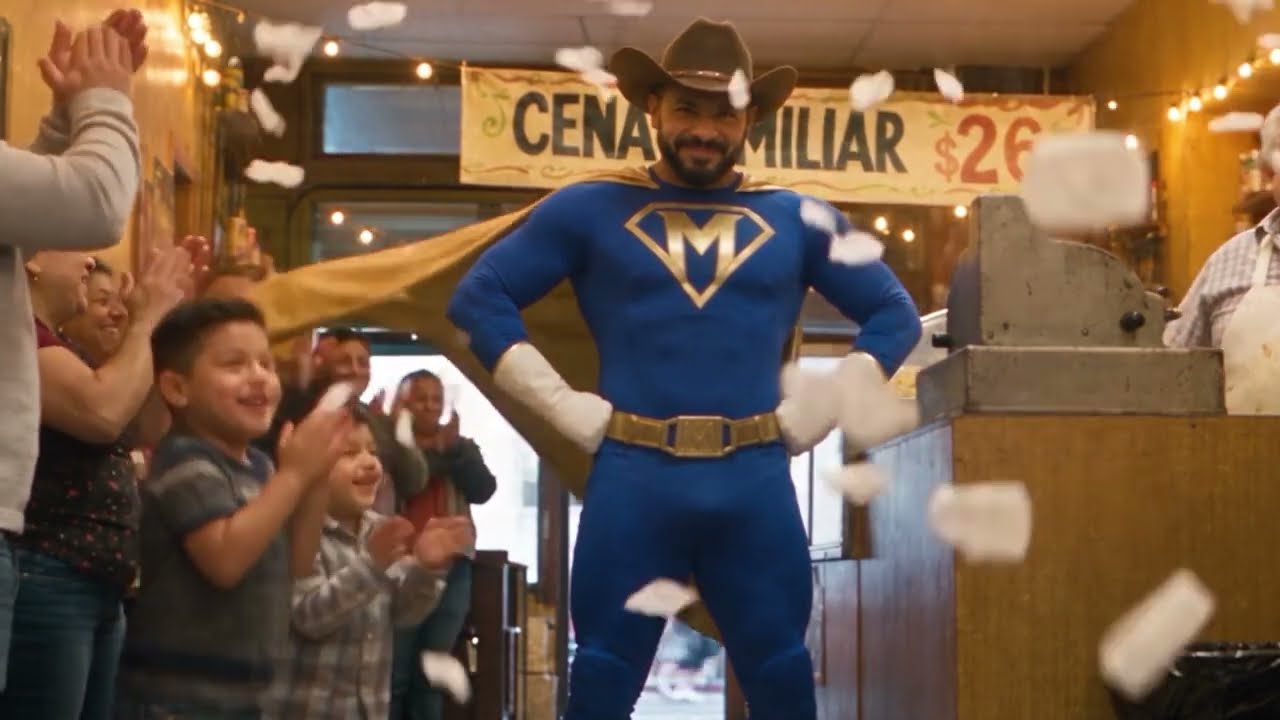 Markitos EP01
Your brand in the story, rather than interrupting it.
A branded microdrama puts the product inside the story world instead of in front of it. People watch because the thing is good, and the brand rides in the plot rather than the pre-roll. Serialization is the part worth paying attention to: an ad is one impression, and a season is a reason to come back sixty times.
A microdrama is a scripted series built for a phone: vertical, shot in the 9:16 frame rather than cropped into it, with episodes that run roughly sixty to ninety seconds and end on a turn. A full season runs sixty to a hundred of those episodes, which adds up to about the length of a feature, released as a daily drip instead of a single sitting. The form comes out of Chinese vertical drama and has moved into English-language production over the last few years. It isn't a short film and it isn't a clip. The closest honest comparison is a soap opera with the pacing of a thriller trailer.
Length is the least interesting difference. A short film is one closed story and a Reel is one moment, while a microdrama is serialized, so it is built to make you swipe to the next one sixty times. That changes the writing more than the shooting: every episode needs its own reveal, reversal and cliff, and the season has to hold a spine underneath all of them. A short film can end ambiguously. Episode 14 of a microdrama cannot.
Volume and locations. A sixty-episode season is a feature's worth of story with a feature's worth of setups, at a budget that could never support a feature's crew days, and it usually wants locations a small production cannot get to. Generated production takes both constraints off, which is why the category moved so fast. The part that does not change is the writing and the edit: a bad season generated quickly is still a bad season, only there is more of it.
Backlot74 is our slate of original English-native microdrama series. Six titles are in development with written bibles, season architecture and scripts on the page rather than pitch decks, and the list on this page gives the honest status of each. It is where our own original work lives, as distinct from microdramas we produce with or for a partner.
The same job a drama production company has always done, with a different back half. The front half is unchanged and is where most of the time goes: development, a series bible, season architecture, and sixty to a hundred written episodes. The back half is where generated production replaces a crew, a location scout and a shoot schedule, which is what makes a season of this length affordable at all. What does not change is the review. A human directs it, a human edits it, and a human looks at every frame before it ships. A studio that skips that part is a render farm with a logo.
It is a young category and it splits roughly three ways. There are the vertical-drama platforms out of the Chinese market who commission at volume and increasingly want English-native titles. There are traditional production companies experimenting with generated shots inside an otherwise conventional pipeline. And there are AI-native studios, ours included, built around the format from the start rather than retrofitted to it. The useful question to ask any of them is not which models they use, it is whether they can show you a written season rather than a sizzle reel.
Yes, and it is a better fit than most brands expect. A branded microdrama puts the product inside the story world instead of in front of it, so people watch because the story works rather than tolerating an ad to reach something else. Serialization is the real advantage: an ad is a single impression, and a season is a reason to come back sixty times. We have produced this format for partners, including a series that premiered in Austin in September 2026.
The writing is the long pole, not the pictures. A bible and a mapped season is measured in weeks, scripts for sixty to a hundred episodes is the real work, and generation plus human edit runs alongside once the references and characters are locked. We will not quote a calendar without a script, because the honest answer depends entirely on whether the season is written.
Vertical-drama platforms need English-native titles from producers who can ship a full season repeatably. We're an independent studio with six original series in development, an agentic writers' room, and a production system built for that volume. If you're licensing or commissioning English content, bringing a format, or looking at the category early, this is the conversation.
Let's talk